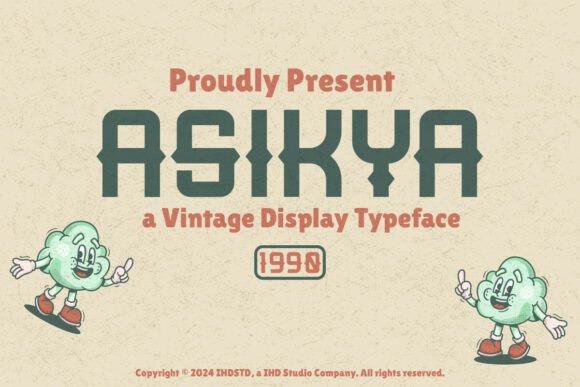
Asikya: A Vintage Display Typeface Bridging Nostalgia and Modern Design
In a digital landscape increasingly dominated by sleek minimalism, Asikya emerges as a refreshing contrast — a geometric vintage display typeface that blends bold lines with soft curves to evoke a sense of hand-crafted warmth. More than just a font, Asikya captures the visual energy of the early digital era while offering a contemporary twist that resonates with today’s design sensibilities. Whether used in branding, editorial design, or product packaging, this typeface brings a distinct personality that stands out without overpowering the message.
The Rise of Retro Aesthetics in Modern Design
Retro design elements have steadily gained traction across multiple creative fields, from web and graphic design to fashion and product development. This resurgence isn’t just about nostalgia — it reflects a growing desire for authenticity and emotional connection in an age saturated with digital perfection. Asikya fits seamlessly into this trend, offering designers a tool that feels both familiar and fresh. Its angular yet rounded forms echo the early days of computer graphics and print design, making it a perfect match for brands and creators aiming to convey a sense of history with a modern edge.
Why Asikya Stands Out Among Vintage Fonts
Unlike many retro-inspired fonts that lean heavily on exaggerated quirks or overly stylized details, Asikya strikes a balanced visual tone. Its geometric structure ensures readability and adaptability, while its subtle imperfections and warm curves add character. This dual nature makes it versatile for a wide range of applications — from logo design and packaging to social media visuals and editorial headers. Designers appreciate how it can anchor a composition without overwhelming it, allowing for creative flexibility while maintaining a distinct identity.
Practical Applications for Designers and Brands
For professionals working in branding, marketing, or publishing, the choice of typeface plays a crucial role in shaping perception. Asikya offers a compelling option for those looking to inject personality into their visual language. Consider a boutique coffee brand using Asikya on product labels to evoke a sense of artisanal craftsmanship. Or a lifestyle blog leveraging the font in editorial headers to create a warm, inviting tone that complements vintage photography and curated content.
Freelancers and small business owners can also benefit from Asikya’s adaptability. In a world where visual consistency across digital and print media is key, having a typeface that works well across platforms can streamline design workflows. Whether designing a website header, a poster for a local event, or a limited-edition product label, Asikya provides a consistent aesthetic that enhances recognition and brand cohesion.
How Asikya Fits Into Changing Design Workflows
As design tools become more accessible and user-friendly, the demand for high-quality, expressive fonts has grown. With the rise of platforms like Canva, Figma, and Adobe Express, even non-designers are seeking fonts that offer both visual appeal and functional versatility. Asikya meets this need by offering a bold, yet approachable look that works well in both digital and print formats. Its legibility at varying sizes and compatibility with modern design software makes it a practical choice for creators at all skill levels.
Moreover, the increasing emphasis on brand storytelling has shifted focus toward typography as a key narrative element. Fonts like Asikya help communicate a brand’s values — whether that’s authenticity, creativity, or a sense of heritage — without requiring complex visual systems. This makes it an ideal choice for startups, creatives, and small businesses looking to establish a strong visual identity with minimal resources.
Design Trends and the Evolution of Typography
Typography has always reflected the cultural and technological shifts of its time. From the ornate serifs of the Victorian era to the clean sans-serifs of the digital revolution, typefaces serve as visual markers of progress and identity. Today, we’re witnessing a return to expressive, personality-driven fonts — a reaction to the uniformity of early digital design. Asikya represents this evolution by blending the warmth of hand-crafted lettering with the structural clarity of modern typography.
This trend is particularly evident in the growing popularity of hybrid design styles — where analog textures meet digital precision. Designers are increasingly layering vintage fonts like Asikya over clean, minimalist layouts to create contrast and visual interest. The result is a dynamic interplay between past and present, tradition and innovation, that resonates with audiences across age groups and industries.
Recommendations for Using Asikya Effectively
To get the most out of Asikya, it’s important to consider context and application. Here are a few practical tips for incorporating this vintage display typeface into your design projects:
- Pair it with clean sans-serif fonts to balance its bold character and ensure readability in longer compositions.
- Use it sparingly — Asikya shines best in headlines, logos, and short bursts of text rather than extended body copy.
- Experiment with color and texture to enhance its retro feel. Try pairing it with muted tones or paper textures for a nostalgic effect.
- Test across platforms to ensure it renders well on both screen and print, especially when used in responsive web designs.
Conclusion: A Typeface That Speaks to the Present and Past
In a world where design trends move quickly and digital aesthetics often dominate, Asikya offers a compelling alternative — one that honors the past while fitting comfortably into the present. Its geometric structure, bold presence, and subtle warmth make it a valuable asset for designers, marketers, and entrepreneurs alike. Whether you're crafting a logo, designing a product label, or curating editorial content, Asikya provides a visual language that is both expressive and functional. As the demand for authentic, emotionally resonant design continues to grow, fonts like Asikya will play an increasingly important role in shaping how we communicate and connect through typography.